
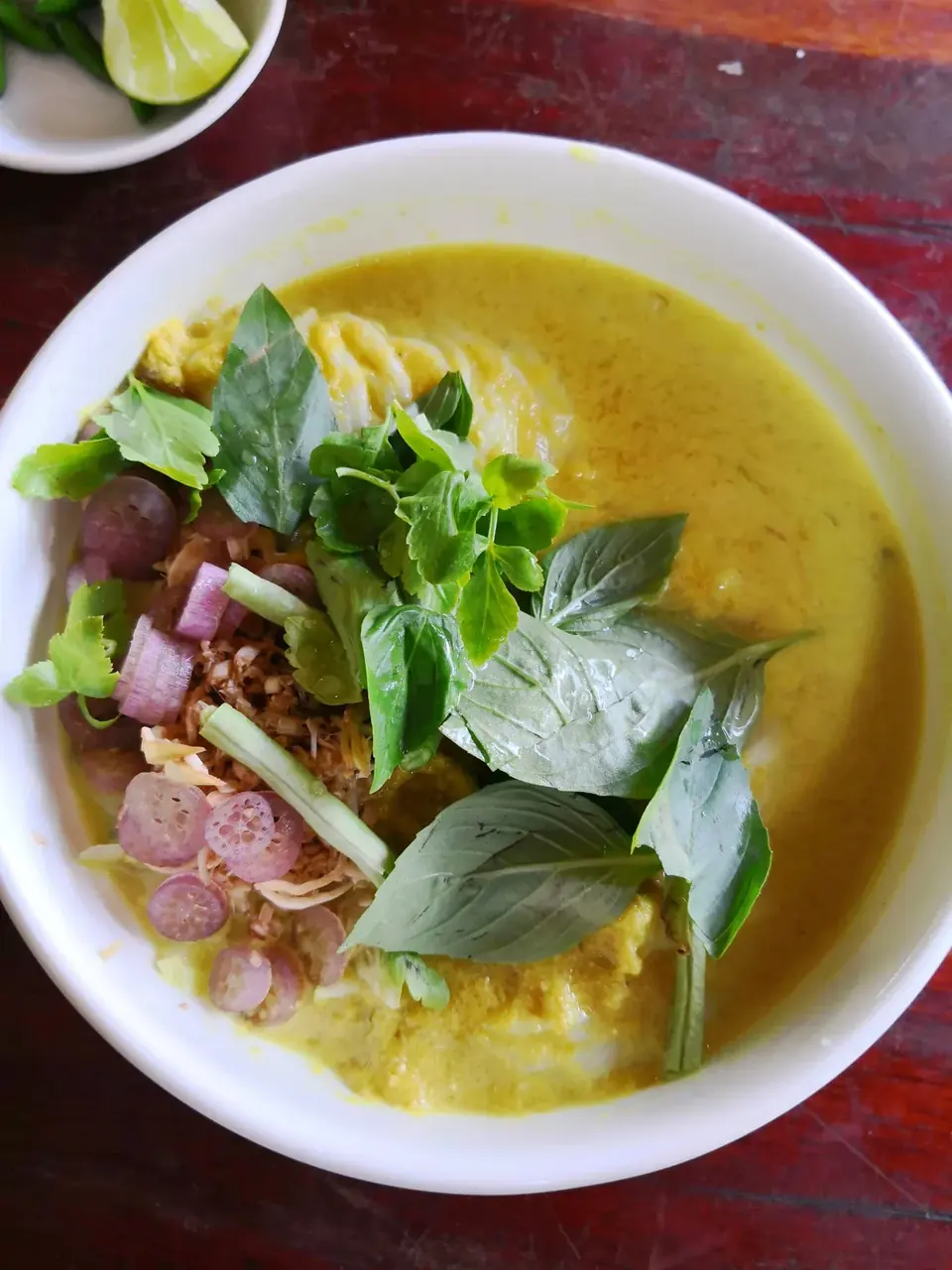
Num banh chok is a good reason to leave space in your Cambodia itinerary for an ordinary meal. A bowl can bring together soft rice noodles, an aromatic sauce and a generous contrast of vegetables and herbs. Instead of approaching it as a dish to tick off, use it as an invitation to notice what a particular cook chooses to put on the table.
Start with the noodles
The name is closely associated with Cambodian rice noodles and the dishes built around them. A familiar preparation pairs the noodles with a fish-based sauce scented with ingredients such as lemongrass and turmeric. Fresh vegetables and herbs bring texture alongside the sauce.
Num banh chok is commonly eaten for breakfast, although it is not limited to the morning. Recipes, toppings and the balance of flavors vary. One bowl should not be treated as a final definition of the dish—or a reason to judge a different cook’s version as wrong.
Look at the bowl before adding anything
Give the first spoonful a chance before reaching for condiments. Notice how the noodles, sauce and fresh accompaniments work together. Then ask which additions are intended for your bowl and add a little at a time.
The vegetables may arrive already mixed in or separately. If you are unsure, watch how your host serves their own meal, or ask the vendor to show you. You do not need a perfect eating technique to appreciate the dish. A patient question is better than pretending to know what everything is.
Useful questions when ordering
Order the sauce and portion you want before the bowl is prepared. A common version uses a fish-based green kroeung sauce with rice noodles, vegetables and herbs. Chili and accompaniments may be served separately; add a little at a time.
A fish-based sauce is not vegetarian, and ingredients can include other fish or seafood products that are not visually obvious. If you have an allergy or a dietary restriction, explain it clearly and ask about the sauce as well as the toppings. Do not assume that removing a garnish changes the ingredients already in the broth or paste.
Choose a place thoughtfully
Start with a breakfast stall or a traditional market in the morning, when num banh chok is most commonly served. Sit down for a bowl rather than planning it as a roadside stop between tight connections. Pay the vendor's portion price; recipes and prices differ between stalls.
When photographing your meal, keep the camera over your own table rather than in the vendor’s working space. Ask before making a portrait. If someone is busy assembling orders, wait to ask questions until the rush passes. Paying fairly for a meal matters more than obtaining an elaborate explanation for free.
Make the meal part of the journey
Try keeping a small food note: where you ate, which sauce you ordered, what accompanied it and what you would ask next time. That creates a useful memory without turning a single visit into a claim about an entire country.
For a second bowl, change one thing—perhaps the neighborhood or the sauce—rather than chasing an online “best” ranking. The interesting comparison is often the one you can describe: a different texture, a new accompaniment or a cook’s explanation of their preferred balance. Let curiosity set the pace, and leave room for another meal tomorrow.
Questions before you go
Is num banh chok always the same dish?
No. The rice noodles appear with different sauces and accompaniments. Ask what the vendor is serving that day.
Is it a breakfast food?
Breakfast is the most common time to find it. Some vendors also serve it later in the day.
Sources & further reading
Written with AI assistance and checked against the linked references. This guide does not claim first-hand reporting.