
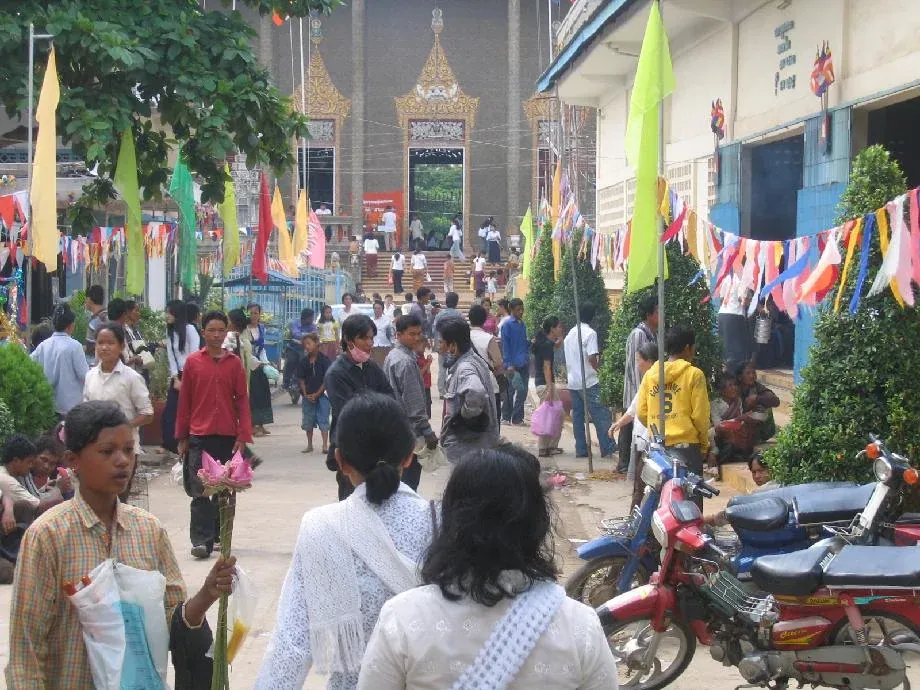
Pchum Ben asks a different kind of attention from a visitor. The meaningful moments are often quiet: a family arriving with food, a pause during chanting, or relatives making time for one another. Understanding that purpose changes how you approach a pagoda—and how you plan a trip during this important season.
What Pchum Ben means
Pchum Ben is a Cambodian Buddhist observance associated with remembering ancestors and making merit. Families visit pagodas, offer food to monks and gather with relatives. For participants, these actions connect care for the living with remembrance of those who have died.
The observance extends over fifteen days and generally falls in September or October. Its place in the lunar calendar means the Gregorian dates move. Check the current Cambodian holiday calendar before booking; a public-holiday period and the full religious observance are not the same length. Practices and personal beliefs differ between families, and not every Cambodian observes the festival in the same way.
Visit as a guest, with permission
A pagoda is a place of worship before it is a place to photograph. Ask a local host or temple representative whether visitors are welcome and where you may sit. Arriving with someone who can explain what is happening is more helpful than trying to follow an online timetable.
Wear clothing that covers shoulders and knees, watch where shoes are removed and keep your voice low. Leave doorways and offering areas clear. If a ceremony has begun, wait for guidance rather than crossing in front of participants to find a better view.
Offerings are personal, not props
If you would like to contribute, ask what the pagoda actually needs. Let your host explain the appropriate way to present an offering. There is no need to reproduce a ritual you do not understand just to feel involved. Quiet observation can be a respectful form of participation.
Ask before photographing a person, a family’s food or a moment of prayer. A friendly welcome is not automatic permission to publish someone’s face. Put the camera away if consent is uncertain, and never rearrange offerings for a picture.
Build a flexible festival itinerary
Before traveling, confirm transport, your accommodation check-in arrangements and the opening hours of places you intend to visit. Allow extra time around the main holiday and keep one day light enough to absorb a changed departure or a family invitation.
A sensible day might include a pagoda visit arranged through your host, a relaxed meal and an ordinary neighborhood walk. Do not stack several religious visits into a checklist. Leave room to listen when someone chooses to share a family memory, and avoid pressing them to explain private beliefs.
What to take away
The value of a Pchum Ben visit is not the number of ceremonies you see. It is the understanding that food, time and remembrance can belong to the same act of care. Before leaving, thank your host, check that you have not left rubbish behind and ask whether sharing your photographs would be welcome.
Questions before you go
Can a non-Buddhist visitor attend?
Ask the pagoda or your local host. Being welcomed to observe does not mean every ritual or area is open to visitors.
Should I bring food?
Ask first. A contribution that fits the community’s needs is more useful than guessing what to buy.
Sources & further reading
Written with AI assistance and checked against the linked references. This guide does not claim first-hand reporting.